Showing posts with label death. Show all posts

Thursday, 9 February 2012

Glitch/Fart/Flash


It begins not with a bang, but with a parp: in their book On Bathos Sara Crangle and Peter Nicholls trace the dawn of modern bathos to a farting corpse in Pope’s Memoirs of Martinus Scriblerus (1741). Initially, bathos simply meant something like nadir. Only in Eighteenth century England does it start to acquire the sense of, as the OED has it, ‘a ludicrous descent from the elevated to the commonplace in writing or speech; anticlimax’. As Crangle and Nicholls suggest, this descent or deflation often has to do with material things, and especially corporeal things, making themselves suddenly and shamingly obvious. In a flash - or with a flatulent toot - we switch from the sublime to the ridiculous.


I was reminded of this celebrated literary fart while playing Pippin Barr’s browser game All's Well that Ends Well. Barr presents players with a simple objective: they have to pilot their aircraft across the screen, avoiding salvos of oncoming missiles. The only problem is that there are far too many missiles, moving far too quickly, for the player to have the slightest chance of success. Eventually it becomes apparent that you can make it across, but only by dying repeatedly; each time the avatar ‘respawns’ it is, in accordance with time-honoured videogame convention, impervious for a second or so, and by exploiting this fact it's possible to inch across the screen. Do this, however, and you’re presented with another, almost identical scenario, pitting a star ship against an asteroid belt. Clear this screen (and, again, this can be done by holding down the ‘d’ key) and other, increasingly surreal versions of the same situation await - flying chair versus flying station wagons, flying station wagon versus flying giant broccoli stalks, missile versus Easter Island heads etc. When (through sheer persistence rather than skill) the player does clear a screen, their ‘success’ is qualified by the pile of wrecked avatars littering the landscape below.

As Barr notes, ‘[t]he idea is of repeated death and of memories of that death, like the corpses left behind in many other video games. But pushed to an extreme for a particular effect.’ That ‘particular effect’ is, of course, a bathos effect; the game’s overblown introductory text (‘You are the brave pilot of a high-tech spy plane... May God protect you’) is immediately undercut by the tinny pop that accompanies the plane’s first collision, which it doesn’t take much imagination to hear as a kind of fuzzy digital fart. His Let’s Play: Ancient Greek Punishment, a suite of unwinnable minigames based on the torments of Tantalus, Sisyphus, Prometheus et al (rapidly alternate between the ‘g’ and ‘h’ keys to dislodge the eagle eating your liver, to roll a boulder uphill etc.) follows a similar trajectory. If Barr’s games mock the way that videogames tend to handle death, then they also suggest how good they are at generating bathos.


In his introduction to Christie in Love (1970), playwright Howard Brenton suggests that the play’s police officers are essentially stock characters, and to be played as such. However, very occasionally ‘they have ‘sudden lights’, unpredictable speeches beyond the confines of pastiche. As if a cardboard black and white cut-out suddenly reaches out a fully fledged hand. It’s a bathos technique... It is very cruel’. Players of videogames will be more than familiar with situations like that which Brenton describes. There are moments when AI functions adequately, and there are even moments when it can seem to have ‘sudden lights’ but there are also all those moments at which the limitations of the code ‘behind’ the AI characters become glaringly apparent.

In Skyrim (which I recently had to review and which, despite my violent aversion to the Tolkeinesque, was pretty fun - nice skies) it’s not uncommon for the illusion of a coherent world to be undercut by the redployment of a speech sample you’ve heard a thousand times before, or a character’s sudden schizoid switch in demeanour (these moments, in fact, are weirdly evocative of Hedayat’s disquieting use of repeated phrases and gestures in Blind Owl).
Then there are the weirder glitches. Just how surreal these can be is suggested by a bullet point in the notes for the game’s first patch, which besides promising to remedy framerate issues and blurred textures also claims to have

Fixed occasional issue where a guest would arrive to the player's wedding dead

In attempting to talk about downright weirdness of some of Skyrim’s glitches I kept defaulting to the idea that it was almost as if the disc was dreaming or delirious, as if we were getting a glimpse into its subconscious – kind of like sharing a bed with someone who talks in their sleep (which I do). The term brainfart (for which the OED, alas, doesn’t have a definition, though wikipedia is pretty fascinating on the subject) springs - as it were - to mind.

As Skyrim proves, glitches can be fascinating - we get a glimpse of how the game, as an assemblage of interacting systems, works, and this is often more compelling than the illusion it’s trying to sustain (Noah Wardripp Fruin calls this ‘the TaleSpin effect’, after a venerable computerised story generator that produced narratives far less interesting than the processes it used to compose them). But glitches can also be strangely shaming, as can the experience of in-game death. Both can trigger the bathetic realisation that we’ve been fooled into responding to a game as if it were something more than a simulation. This is the sort of alienation Graeme Kirkpatrick describes in his account of Resident Evil 4’s QTE sections. For him the graphic button prompts that flash up on screen ‘and the sudden quickening of events seems to conspire to produce a sense of ridiculousness. In the midst of playing the game... we are suddenly offered the spectacle of our own activity as something childish. We see ourselves pressing a brightly colored plastic button on an infantile toy’. He reads this realisation of his own absurdity through Bergson’s theory of laughter, which suggests that we laugh in order to draw attention to and censure ‘the encrustation of the mechanical upon the living’.* For Bergson, laughter is supposed to jolt us awake when we fall into automatic or quasi-mechanical behaviours (like tapping buttons in front of a screen) - an idea that has obvious ties to Pope’s comedy, rooted as it is in his anxious fascination with the possibility that we’re just digestive tracts with delusion of grandeur.
The glitch, like the flash of ‘sudden light’ or the fart that brings us crashing back down to earth, entails a rapid but profound switch in tone/scale/register. In their ‘Notes on Glitch’ Manon and Temkin emphasise ‘the momentary or punctiform nature of the initiating impulse. A glitch is a “surge,” “a sudden short-lived irregularity in behavior” (OED), whose aftereffects are at once shocking and effusive. The garish appearance and obstreperous sound of glitch art betokens its origination in this way: a tiny variance has triggered major damage.’ Perhaps games can harness both the dramatic potential Brenton sees in bathos and the thought-provoking power of glitches and interruptions?


Arguably some already do. If Silent Hill 2’s AI-controlled Maria occasionally seems a little stiff or suspiciously dopey, for example, this only adds to the impression that - like Solaris’ simulacral wife-substitute Hari, who she in so many respects resembles – she’s something between a person and a piece of code, a machine and a memory.** Hari’s repeated deaths and resurrections mirror the logic of videogames, while the sequence where, panicked at having been separated from Kelvin, she tears through a metal door is, to the gamer, more than a little evocative of AI companions’ dodgy pathfinding routines.
While we might be expected to pity Hari, pathos keeps slipping into bathos - her immortality imbues her suicide attempts with something of the existential slapstick of a Wile E. Coyote cartoon, and our emotional response is all the more complex for it.

Moreover, in Solaris as in Silent Hill 2 there is something ridiculous in the willingness of the heroes to believe they can have their wives back, despite the overwhelming proof that they are merely imperfect copies or self-induced delusions. And of course their suspension of disbelief mirrors that of the viewer/player, who as Kirkpatrick insists, is always vulnerable to having the ‘ridiculousness’ of their absorption in a fiction/simulation made bathetically clear to them.

There is then evidence that games might be uniquely suited to exploring bathos and immortality, that they could put a fresh twist on a set of tropes and figures – or, as Bogost might have it, ‘unit operations’ – that underpin everything from the myth of Sisyphus to Groundhog Day, and in so doing address their inflection by technology. There is also evidence – and this is something we mustn’t forget – that Alexander Pope was indirectly responsible for The Nutty Professor 2: The Klumps.***


* He also links this revelatory flash to Walter Benjamin’s notion of jetzeit, the implications of which for animated gifs are explored in an intriguing piece by Daniel Rourke

** It might be worth noting that Alan Wake and Shadows of the Damned both borrow this ‘haunted by repeated visions of beloved dying’ trope, and for that matter that SotD lays luridly bare the strain of fetishistic misogyny it’s bound up with

*** Though as a mitigating factor this means he can claim to have had a hand in Nothing Really Matters – for me one of Janet’s finest hours

Wednesday, 22 July 2009

Outside the Box


Making good on the early promise of Jaws 3 and that one level in Earthworm Jim 2 where you could wear threedee goggles, everyone from Pixar to Sony to Dazed and Confused is all about creating stereoscopic depth-of-field fx these days. Prizing 'immersion' and lauding fictions/characters for their 'depth' is so commonplace in discussions of books, movies, telly and games that the entertainment industry's desire to literalise those tags is understadable. Not everyone's so big on interiority and volume though; I've been reviewing a lot of gay cinema lately that taps (consciously or not) into a venerable tradition of challenging 'depth > surface' prejudices and queering spaces, whether by incorporating 2D animation & obvious green screen stuff or by peopling films with defiantly puddle-deep caricatures.

It's gotten me interested in films that think seriously about how cinema uses 2D pictures (1440 of them each minute) to create an illusion of 3D space, in stuff like La Jetee and Funeral Parade of Roses, the photo-scanning thing in Bladerunner and the hero of Blow Up trying to make sense of a space/event by pinning photos up around a white-walled open-plan studio. I just watched Herzog's Nosferatu, which - as a remake of an old film about a reanimated corpse - is all about cinema's status as (pace Laura Mulvey) 'death 24x a second.' It opens with a handheld camera moving across a line of dessicated bodies that, thanks to the organic unsteadiness of the camera operator's hand, occasionally seem uncannily vital (usage of the word 'uncanny' is, of course, advised here; the film's chock-full of phenomena Freud catalogues in his perennially-cited piece on Hoffmann and unheimlichkeit). Though I'm sure there'll be all sorts of revealing self-referentialities in upcoming 3D movies, it'll probably be a while before any film makers who're concerned with what the medium is/does can afford to use this tech - which raises a weird issue; Kojima's spent most his career as videogame designer making it clear he wanted to make movies, but it's possible film makers will discover they've a lot to learn from stuff like Goichi Suda' Killer 7 when it comes to doing 3D meaning-making and storytelling.

Of course, the people/objects that come out of the screen will only be telepresent, intangible and odourless (a recent radio ad for a teleconferencing company lists bogus stats regarding how many business people don't wash their hands, shower etc.). Although Sadako crawls out of the telly in Ringu she doesn't lay a finger on her victims, staring them to death instead. Teletactility is technically possible, but (as Vivian Sobchack's discussed) cinema induces tactile sensations in viewers already, and perhaps audiences don't want movies to be more-than-metaphorically 'touching.' I've been making a lot of pictures with chewing gum lately. It lends an ickily material and intimate dimension (and, of course, a literal dimension, a Z axis) to flat, idealised images, especially in the era of Swine flu-induced salivaphobia. It smells nice too.


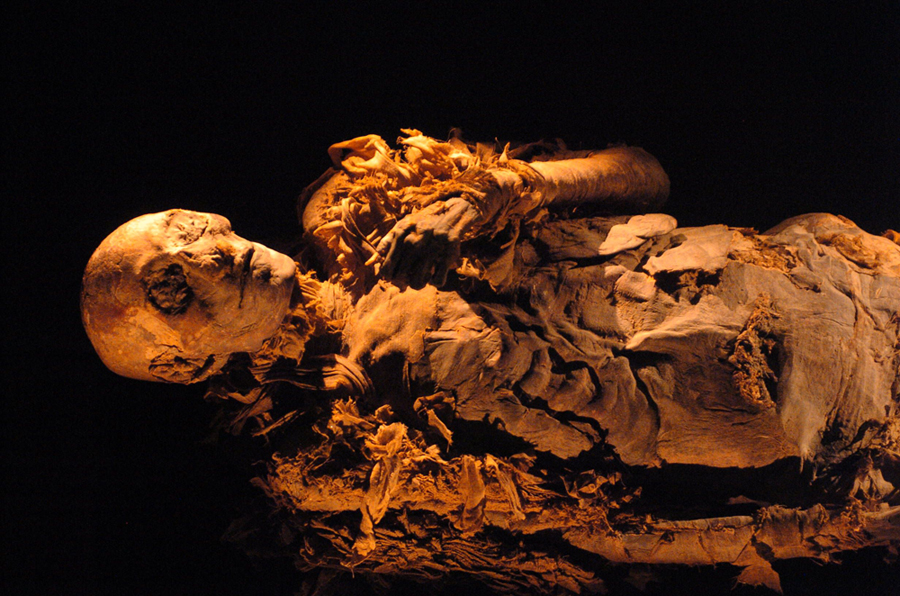
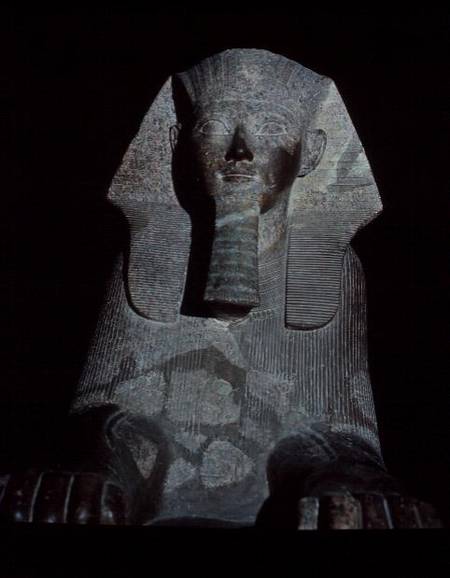
(Dazed cover from here, gummed Velasquez mine, Sadako from here, M.B.V.3.D. poster here, liquidisation of circa 1960s social convention via camera here, late Dreamcast game resembling aforementioned here, dead Hatshepsut here)


Monday, 27 April 2009

What the Odds Are


Lost my wallet last week. Does things' being irrevocably gone seem more freakish & unjust given how replaceable/recoverable/immaterial so many things are circa e-capitalism? I realised I felt on some level aggrieved at there being no text field I could type 'wallet' into like I'd do w/ a misplaced file in my hard drive or locating a pub to conduct a date in...

Always found interesting celebrity's basis in proliferation & ubiquity, as in not just the circulation of productions, merchandise, accounts and images but also the shuttling of the people in question across timezones & places (in one capital & Balenciaga tuesday, another & Junya Watanabe Thursday nevertheless on red carpetting & reprising a pose) so that it becomes an almost incredible coincidence you'd be spatiotemporally proximate (even if you've paid, say for a gigticket, to be so - & hence fans' OMFG!ing & spazz-outs). There's a kind of eggs-in-one-basket-averse logic that's touchingly close to pharaohs commissioning statues covered in inobliterably deep-graven cartouches as insurance against their souls being left homeless -tho now its about mobility rather than monumentality, quitting the White house to conduct nuclear war from the presidential doomsday plane etc.

The star/fan dynamic, its radical assymetry (the amount of geographical, neural, discursive space celebrities monopolise, how they can't be expected to invest imaginatively or emotionally at all in people who whether idly or trulymadlydeeply do in them) has - as an erstwhile mopily pretentious suburban teen for whom being a fan of devout fans (Richey Edwards, pre-solo Morissey w/ his fondness for Wilde, who once strewed Bernhardt's vector off a Folkestone ferry with lillies) was central, self-fashioningwise - always fascinated me.

Paul Virilio's (in The Aesthetics of Absence) great on Howard Hughes' 'taste for ubiquitous absence,' his deploying his wealth first to become inordinately visible, then to disappear, always keeping prospective re-appearance up his sleeve (H.H. reputedly 'supported, at great expense, a harem' that he never visited, it being 'enough to know that he had the power of going there & the young women whose pictures he had were awaiting his arrival').

Common to the visible/invisible eras, Virilio argues, is Hughes' desire to be everywhere/nowhere (same diffs) that was expressed through attempts to homogenize space, first via media exposure, aeronautics, global circumnavigation speed records (which kinda = taking playboy globetrotting/jetsetting to the nth degree) then by living alone, nude & becysted in 'rooms... narrow & all alike, even if they are worlds apart' with screeens showing his movies in lieu of windows ('the windows were all shaded and the sunlight could no more penetrate... than the unanticipated image of a different landscape... suppressing all uncertainty, Hughes could believe himself everywhere & nowhere, yesterday & tomorrow, since all points of reference to astronomical space or time were eliminated').

Its w/ reference to the visible-invisible parabola Virilio says Christ is 'the inverse of Hughes,' tho its true in a more fundamental way; Elaine Scarry's said its very possible to miss how boggled by J.C.'s thereness, his amenability to being seen and spoken, people in the gospels get; in contrast to the omniscience/-presence of Jehova (who tautologically am the great I am), Jesus' 'predicative generosity' means 'consent to be at a given moment confined by some attribute... to be, though everywhere, apprehensible at every given moment as only somewhere rather than everywhere.'

While on a deistic tip, I love fan-art - of which one-time celluloid Hughes Leo Di Cappie has occasioned his fair share - for that religiosity porn also often has. Hence the violation of the above otherwise tonally harmonious collage w/ some pencillings of total baldwin Channing Tatum.

(autistically detailed tatum from here, monochrome hatshepsut here, teenyboppers here, Giottan J.C. & co. here, Caravaggian J.C. & co. here)

Monday, 2 March 2009

Implicit/Allusive Spoilers OR 'like wet gloves they bobbed and shone til he sluiced/ Them out on the dunghill, glossy and dead'


Firstly, it's conceivable that Bale's intentionally channeling a certain puppyfat-prone midfield ace in The Prestige right? With his inanely boyish grin and estuary vowels? The movie deployed pretty much every key fin de siecle gothic trope (live burial, orientalism, dopplegangers, fragmentary journals, science and/science as magic, the gaslit pursuit of incognito gentlemen by incognito gentlemen over Eastcheap cobbles*) but in a deft and intelligent way. Its spin on the gothic idea of the selves we're obligated to murder in order to attain the condition of civilization (the actual unattainability of which ideal means the murder has to daily re-occur) was pretty chilling/affecting/effective, and as evocative of the 1970s/80s sci/bio-fi gothic of  Alien, The Thing or Bladerunner as it was Jekyll, Dorian or Dracula (it's a movie almost as preoccupied w/ parthenogenesis as Alien 4). Even ScarJo's bungled UK English isn't that excruciating.

The sense you're left with of lives stunted or wasted, of selves expensively, performatively dissembled, made me think of Judith Butler's notion of 'heterosexual melancholy' - straight culture's disavowed sorrow over the people we're required not to be &/or love. On another tack, kinda weird that Hugh Jackman's dandified stage-magician turn might have inspired this year's bizarre, razzledazzle-y Oscars format tho isn't it?

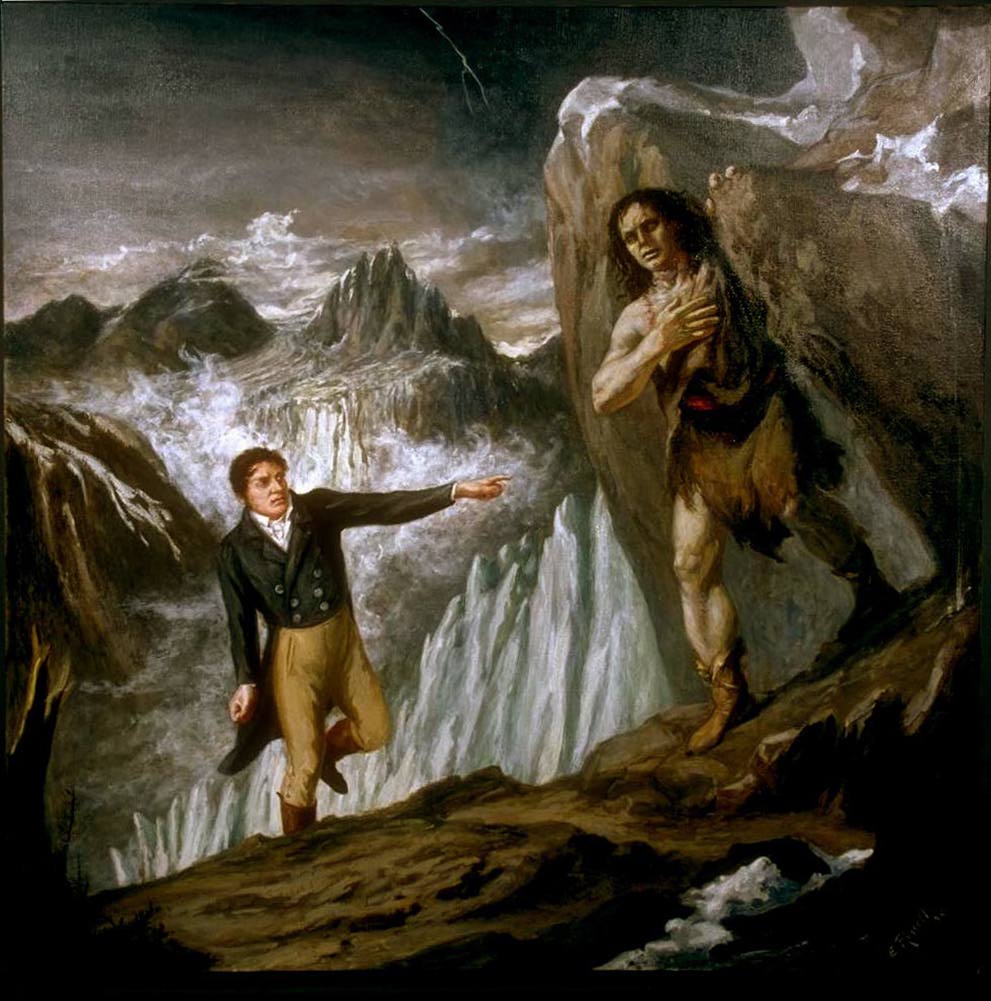
*Eve Kosofsky Sedgwick's argued that a 'tableau of two men chasing one another across a landscape' is central to Frankenstein in particular and Victorian gothic in general. Pretty much The Thing's entire cocktail of bromantically tinged & paranoiac macho rivalry, icy climes, monstrosity and science is cribbed directly from Shelley.

(Kurt, hirsute and investigating, is from here, Lampsesque bale here, Frankencrevasse here, Frankenhug (w/ Drogba) here)

Wednesday, 21 January 2009

Equine Pathos II: The Verbinskining


I've previously talked a) about how much I enjoyed Ring and b) about equine pathos (whereby the portrayal of horses being injured is used to lend stories tragicky spiritualistic heft). Well, just saw the American version of Ring, the which I'd fully expected to be bad for reasons of innate anti-Hollywood snootiness plus because Gore Verbinski's next film was Pirates of the Caribbean, which I still find so incongruous that I call bullshit on my brain whenever it reminds me of the fact and have to aiemdeebee it. It was pretty fun self-righteously hand wringing about the badness of it all and I'd been happily shooting fish (wise-beyond-his-years kid who makes spooky crayon drawings - pow! -  superfluous Naomi Watts underwear shot w/in five minutes - kablam! -  switching the male character from an academic to a brodaciously grungey camera op - doosh! and etc.) for over an hour when THIS came along, nudging the whole enterprise into a world of actually kinda valiant badness I'll admit I hadn't banked on (**SPOILER/question** can you ever bank on a horse threshed by a ferry rudder?). So hats off, Gore.

Monday, 24 November 2008

Equine Pathos: A List


Lists are assimilable & discussable & consequently an optimal blog post format. So here's one about instances of horses figuring in 'oh the humanity' type scenarios in such a way as to make those scenarios seem tragic-er. Any I've missed?? By all means 'hit up' the comments.

The list's (by the way) to mark the having happened of something I've been waiting for: Jon Ronson's piece in the Guardian mag this saturday is the first time I've actually read the Christopher Foster case (the day before the bailiffs are due round, ruined businessman murders wife and daughter, kills pets and horses, torches mansion, stable and cars, shoots himself) framed as a prefigurement of financial catastrophe. I'm pretty sure its gonna become a component of the UK credit crunch ur-myth though.

Part of why the story's so susceptible to mythologization is because Foster offed the horses; while hardly worst thing he did, the venerable convention of troping them as sad-eyed and behoofed incarnations of all that's good in the human soul means violence against horses lends any tragedy a full-on last days of Rome-type resonance, as the following'll demonstrate: 

1.In Zola's Nana there's a dissipated scion of the aristocracy who immolates himself and his racehorses when a scheme to dodge bankruptcy fails. Witnesses attest to uncanny equine screams.

2. In Waltz with Bashir a soldier otherwise desensitized to the horrors of war is sickened by the sight of a derelict hippodrome full of dead and mutilated horses, the rotoscoped fly-crawling eyes and foaming lips of which are lingered on

3. Just how wrong-headed Macbeth's regicide is is suggested by accounts of horses going cannibal

4. When the town's pillaged in Andrei Rublev there's a shot of a horse falling downstairs, which you can't imagine PETA being cock-a-hoop about

5. Probably They Shoot Horses, Don't They? (though I've not seen/read it)

I think it says a lot that in order to convince people they should be as misanthropic as he was Swift devoted a quarter of Gulliver's Travels to describing self-righteous genocidal bigot horses. Maybe we should have an embargo on using them to make things seem kinda profound for a while.

Thursday, 18 September 2008

RIPDFW


So CBS went w/ the above, none more obit-ty photo. Never really had a generational figurehead/personal hero die, by way of their own hand or otherwise, during the hormonally volatile years in which I imagine that sort of thing would have seemed highly profound (though I do recall everything seeming pretty thanocentric circa ODB, John Peel and Yassir Arafat popping their respective clogs almost simultaneously) but this has reacted with trivial, subjective sadnesses of mine in a way that's sort of surprised me. I heard via e-mail, having just replied to a message re: a piece on  Sarah Kane I've been writing and while watching Richey Edwards' last interview on tube, as if the crux of the crossroads they'd all have been buried under in the olden days was the middle of my browser window.

(wistful troubadourish foto, cbsnews.com. Copious, interesting tributes at http://www.edrants.com/remembering-david-foster-wallace/)

Thursday, 21 August 2008

Where then's now


Just back from the Edinburgh festival, where I saw Grezegorz Jarzyna’s production of  S. Kane's  4:48 Psychosis, the one she wrote before/about topping herself. Couldn't work out if the turn of the century costumes, which made me think of stuff Kim Gordon's clothing line put out back in the day, were intentional or just, like, a Polish thing. Then I  remembered that - kind of like that disney island where it's NYE every night or maybe like outsourcing call centres to the subcontinent or having yr photos backed up on a server somewhere or an otter sanctuary - East Europe is where the pre-millennial anglo angst slack gets picked up nowadays, to prove which I've dredged up a  flyer for the 2k7 Exit festival in Serbia (the prodigy played, so did basement jaxx and lauryn hill); you'll plz note the Face-esque layout + effulgent, lime-toned Matrix type and take for granted I can barely see my keyboard for dewy-eyed nostalgia

(4:48 pic from eif.co.uk, proj from exitfest.org, strappy topped festival girl from the exit festival's myspace, subcontinental nuclear testing from en.wikipedia.org/wiki/1998, auntie kim from Kim Gordon Chronicles Volume 1 (cheers Jok))


Sunday, 3 August 2008

R.I.P.Y.S.L.


When that model ‘plunged to her death’ the other week (Ruslana Korsunova, while I was googling the whom, incidentally, itunes threw up Roxy Music’s Tara, which seemed super apt given its air of windswept albeit basically hollow melancholy and the fact that the title = both offhand geordie mode of adieuing and the name of many upscale girls from circa Roxy) it was sort of awkward because fashion’s not very good at seriousness and basically any tribute-payers had to find a respectful way of asserting she was good at a job that boils down to walking, being hot/photographed.

HOWEVER this month’s Paris Vogue  manages a weirdly moving R.I.P Y.S.L by having lots of old good photos of old good models in his clothes (mostly (conveniently) black of course), by teaching you to apply black cosmetics via images of the ever-more haggard/feral Malgosia Bela, by having oldenpics of Kate Moss in the proximity of new pics – catalysing own mortality type reflexions -  and by also being the pro fur issue, meaning a shoot where a frail Brazilian teeters about in the dusky pelts of ignobly slaughtered noble beasts flipping the bird at PETA sympathising placard brandishers. All of this, when I flipped through the magazine drunk on the train home last Saturday, left me a) w/ an impression of profundity/poignancy b) even more abidingly smitten w/ Carine Roitfeld, her iron editorial fist and whole callous, vapid, pseudo-erudite, pseudo-evil schtick.

Incidentally, Carine-darling and owner of everyone’s favourite decolletage Lara Stone said in a recent interview she didn’t think of herself as a very creative person, which is just wonderful given how Pixie Geldof reputedly told paps post ODing ‘creative people can be allowed to make mistakes’ (quote fr. london lite or quite possibly the london paper or metro) and altdom’s whole quasi-art production = inherently holistic and serious non-thesis etc. 

(L. Stone pic out of that summer 2k7 Another Magazine shoot w/ all the crocheted kneesocks fr. supermodels.nl, Paris Vogue pix, contents, lonely belgian 15 yr olds' discussion thereof @ http://www.thefashionspot.com/forums/f78/vogue-paris-august-2008-daria-werbowy-inez-van-lamsweerde-vinoodh-matadin-70337.html)