Showing posts with label faciality. Show all posts

Tuesday, 9 April 2013

Lawnmower Inferno

So this week Lovefilm engineered one of those unexpectedly felicitous double bills, serving up Lawnmower Man alongside Inferno, a documentary about the disastrous and abortive shooting of Henri-Georges Clouzot’s L’Enfer. What turned out to link the two was SFX, with both films using lurid colours and lysergic patterns to communicate a loss of innocence: in Lawnmower Man a holy fool becomes a megalomaniacal cyberbeing, while in L’Enfer a husband is beset by surrealistic visions of his wife’s infidelity. Seeing the two in tandem, I was struck by the fact that, effectswise, they’re essentially coming at things from opposite angles: if Lawnmower Man’s animated sequences see computers clunkily attempting to replicate organic forms, one of the most moving things about Inferno is watching Clouzot’s team inventing ingenious and laborious analogue processes that produce results now reminiscent of nothing so much as the presets available in digital playback and editing software... Ripples, meshes and mirror images, hallucinatory composites and freakish colour schemes are conjured from rotating arrays of lights, sheets of water, layers of plastic and cellophane, sequins and ungents, wires and mirrors. Determined to turn a lake blood red, but unable simply to hit cmd+i, Clouzot dickies with the colour timing, has the make-up department paint the actors a cadaverous grey-green and commissions two sets of costumes - one for each side of the colour wheel.


 In both cases, and even more than in the typical effects-led film, there’s an excessive, flagrantly artificial quality to the SFX sequences. Not content to humbly serve the story, they demand attention on their own terms, as technical achievements. As if acknowledging this, Lawnmower Man’s title screen offers the option to watch just the computer-generated bits, skipping the film that frames them altogether. With L’Enfer, meanwhile, it’s almost as if Marcel’s hallucinations (which are the only scenes that take place in colour) literally refused to be integrated into a finished film, the flimsy narrative architecture designed to support them buckling under the weight of their sensory charge. While the documentary does a decent job of interweaving a sketch of L’Enfer’s plot with the story of its production (a story climaxing with the shock resignation of leading man Paul Reggiani and Clouzot’s subsequent heart attack) these contexts start to seem irrelevant faced with the sheer charisma of the surviving footage. I found myself wishing that they’d just given us a menu of these fragments to watch in whatever order we pleased rather than subordinating them to the (albeit fascinating) history of the project - which desire led to me capping and gif-ifying the bits of it I have.

In this respect, these films also highlight the weird irony of the DVD, a storage medium that allows for random access but which (at least in the case of DVD movies) masquerades as a film strip, surrendering images in a linear sequence. You could argue, in fact, that both movies fail because they attempt to tell A-B stories about things that are inherently non-linear: if it’s no surprise that Lawnmower Man can’t turn the internet and the videogame into material for compelling non-interactive entertainment, it’s perhaps strangely apt that Clouzot couldn’t work a profusion of rushes, alternate takes and freestanding optical experiments into a viable feature film: after all, Marcel’s paranoia can itself be understood as a state of narrative crisis, whereby the proliferation of terrifyingly plausible possible pasts and futures foils any attempt to reach a definitive understanding of what has happened or might happen. Trawling tumblr suggests that both films are fated broken up and strewn, contextless, across a thousand microblogs - but maybe that’s poetic justice?

Lawnmower Man images from:
http://www.virtualworldlets.net/Worlds/Listings/LawnmowerMan/LawnmowerMan1-Falling.jpg

Monday, 27 April 2009

What the Odds Are


Lost my wallet last week. Does things' being irrevocably gone seem more freakish & unjust given how replaceable/recoverable/immaterial so many things are circa e-capitalism? I realised I felt on some level aggrieved at there being no text field I could type 'wallet' into like I'd do w/ a misplaced file in my hard drive or locating a pub to conduct a date in...

Always found interesting celebrity's basis in proliferation & ubiquity, as in not just the circulation of productions, merchandise, accounts and images but also the shuttling of the people in question across timezones & places (in one capital & Balenciaga tuesday, another & Junya Watanabe Thursday nevertheless on red carpetting & reprising a pose) so that it becomes an almost incredible coincidence you'd be spatiotemporally proximate (even if you've paid, say for a gigticket, to be so - & hence fans' OMFG!ing & spazz-outs). There's a kind of eggs-in-one-basket-averse logic that's touchingly close to pharaohs commissioning statues covered in inobliterably deep-graven cartouches as insurance against their souls being left homeless -tho now its about mobility rather than monumentality, quitting the White house to conduct nuclear war from the presidential doomsday plane etc.

The star/fan dynamic, its radical assymetry (the amount of geographical, neural, discursive space celebrities monopolise, how they can't be expected to invest imaginatively or emotionally at all in people who whether idly or trulymadlydeeply do in them) has - as an erstwhile mopily pretentious suburban teen for whom being a fan of devout fans (Richey Edwards, pre-solo Morissey w/ his fondness for Wilde, who once strewed Bernhardt's vector off a Folkestone ferry with lillies) was central, self-fashioningwise - always fascinated me.

Paul Virilio's (in The Aesthetics of Absence) great on Howard Hughes' 'taste for ubiquitous absence,' his deploying his wealth first to become inordinately visible, then to disappear, always keeping prospective re-appearance up his sleeve (H.H. reputedly 'supported, at great expense, a harem' that he never visited, it being 'enough to know that he had the power of going there & the young women whose pictures he had were awaiting his arrival').

Common to the visible/invisible eras, Virilio argues, is Hughes' desire to be everywhere/nowhere (same diffs) that was expressed through attempts to homogenize space, first via media exposure, aeronautics, global circumnavigation speed records (which kinda = taking playboy globetrotting/jetsetting to the nth degree) then by living alone, nude & becysted in 'rooms... narrow & all alike, even if they are worlds apart' with screeens showing his movies in lieu of windows ('the windows were all shaded and the sunlight could no more penetrate... than the unanticipated image of a different landscape... suppressing all uncertainty, Hughes could believe himself everywhere & nowhere, yesterday & tomorrow, since all points of reference to astronomical space or time were eliminated').

Its w/ reference to the visible-invisible parabola Virilio says Christ is 'the inverse of Hughes,' tho its true in a more fundamental way; Elaine Scarry's said its very possible to miss how boggled by J.C.'s thereness, his amenability to being seen and spoken, people in the gospels get; in contrast to the omniscience/-presence of Jehova (who tautologically am the great I am), Jesus' 'predicative generosity' means 'consent to be at a given moment confined by some attribute... to be, though everywhere, apprehensible at every given moment as only somewhere rather than everywhere.'

While on a deistic tip, I love fan-art - of which one-time celluloid Hughes Leo Di Cappie has occasioned his fair share - for that religiosity porn also often has. Hence the violation of the above otherwise tonally harmonious collage w/ some pencillings of total baldwin Channing Tatum.

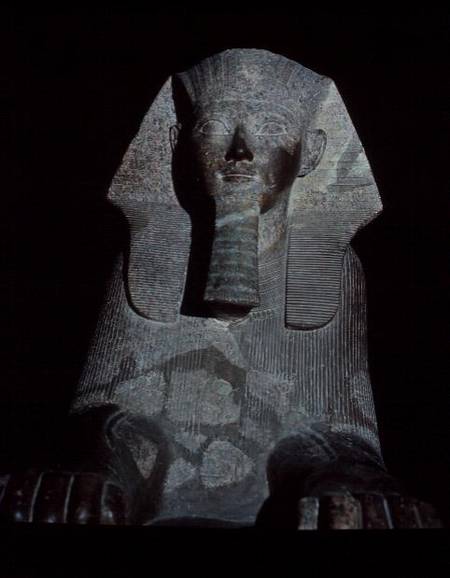
(autistically detailed tatum from here, monochrome hatshepsut here, teenyboppers here, Giottan J.C. & co. here, Caravaggian J.C. & co. here)

Wednesday, 1 April 2009

Tacit Snow


As an appendix to an earlier post plus an aperitivo for forthcoming attractions, saw Queen Christina the other weekend, wherein Garbo, gazing mesmerized out a window, mutters 'the snow is like a white sea, one could go out & be lost in it... and forget the world' while the audience - who has no visual access to the snowfield - gazes mesmerized at the gazing b/w Garbo's face's snowy surfaces & declivities. Not sure I've seen her in anything else but she's amazingly magnetic for the film's entirety - tho pretty much everyone else is formidably hammy & stilted, which could account for it.

(Garbo lapped by all-but Pughesque collar from here)

Sunday, 22 March 2009

o'er 'n' about


Just read about the great Disney rotoscoping scandal, which reminded me of (the also-rotoscoped) Waltz with Bashir. As with the g.d.r.s. - which people've carped has marred & bespoiled their childhoods etc. - rotoscoping in Bashir functions to suggest the difficulty of identifying w/ alien people, eras and experiences (including one's own past). Layering, overwriting and filtering, which techniques I've incidentally been lately mucking about with as I teach myself Photoshop, constitute both Bashir's subject (it's about protagonist/director Ari Folman's attempt to recover his own psychically-suppressed wartime biography) and its methodology. Besides metaphorising the soldiers' modes of parsing the horrible stuff they have to see & perpetrate, the overlaid animation stops the representation of war being too pornographically grimy or schmaltzily exploitative. Right at the end Folman deploys a couple of minutes of archive footage, footage which he's both 'earned' the right to use and schooled the viewer to (better) understand over the course of the movie.

The film capitalises on the uncanniness and increased ambiguity of rotoscoped faces. The way interviewees move, fidget, unconsciously itch their noses etc. makes it clear they're real, but the rotoscoping frustrates the viewer's impulse to look for evidence of what being in a war does to someone on their face or in their eyes. Freud (L. Freud, that is) has talked about the necessity - when painting nudes - of treating the head as another limb, Deleuze of the difference between head and face, & these nearly-faces blur that line, showing that while cartoons tend to be unambiguously hyper-expressive, they can also be eerily inscrutable. Obvs this is especially true of comic books, what w/ their being static & mute. Having recently done my culturally mandated reading of Watchmen and checked out From Hell too I'm suitably wowed by how Moore and his collaborators exploit comics' formal features to whodunnit &/or whydunnit ends.

Still haven't managed to see the celluloid Watchmen. Maybe what I'm most curious about is if/how it'll handle the bit where they relate Dr. Manhattan's biography after he decamps to Mars . The fact the narrative's related via still images distributed on a page is exploited to super-dazzling effect in this issue. Dr. Manhattan's an erstwhile mild-mannered physicist who, due to the drastically nuclear complications of an experiment, exists in a privileged relation to space, time and matter (past/present/future an open book, teleportation & the manipulation of reality's constituent atoms no problem etc.). The character's reminiscing, in part on account of a polaroid he's found, and the reader's meanwhile being filled in on his backstory, laid out in achronologically sequenced panels between which dense & various relations of causality and coincedence obtain (the book's very much about humanity's pattern-recognition/-formation capacities & their potential to redeem or damn us - hence Rorschach*). The visual rhymes, echoes, ironies etc. would survive the transition to cinema, but suspending stills against a white page's vacuum turns out to be such an effective way of conveying outer space's inert airlessness, the character's scrambled temporality & the fact that Merleau-Ponty's contention that

'the multiplicity of points or 'heres' can in the nature of things be constituted only by a chain of experiences in which on each occasion one and no more of them is presented as an object, & which itself is built up in the heart of this space. And, finally, far from my body's being for me no more than a fragment of space, there would be no space at all for me if I had no body'

doesn't hold as true as it ought for him that I can't really imagine a movie treatment matching up...

(vulpine nuptials from here, pensive Folman here, pensive blue nudity here)

*sort of also what this blog's about; the pretty much all-surpassing and occasionally pernicious pleasure I acquire from tracing/recognising/asserting however-arbitrary linkages and associations between things